Showing posts with label CSR. Show all posts
Showing posts with label CSR. Show all posts
Friday, February 4, 2011
Moving On - Check Us Out
To all interested readers and subscribers - in order to align our messages and to make navigation easier we have changed our blog profile and now have combined it within our standard web pages. Check us out at http://theacaciagroup.ca/ideas/ . All archived blogs will be there and we will be posting more frequently on the interface between CSR, Leadership and Community Engagement.


Sunday, September 19, 2010
Forward Focused Thinking and CSR

I was struck by a recent article by Aman Singh that referenced the multi-modal skill set that today’s CSR manager must have. They must be focused on diversity, HR, communications, stakeholder engagement and to an extent, reputation management. The ability to manage a complex and shifting agenda often creates such large and varied challenges that the manager has to shift into firefighter mode, dousing the flames of a crisis before they get too big. This broad approach focuses on “after-the-fact” interventions rather than future oriented, planful and systemic thinking required by corporate leaders.
A study conducted by Ashbridge Business School in the UK and reported to the European Academy of Business in Society, indicates several interesting factors that can assist an organization be truly responsible. First, the study lays out the need for the need for integration of social and environmental issues in to the day-to-day decision making processes. While corporate culture can play a role in this, the study goes further and outlines five competencies or “reflexive abilities” of leaders which they believe can be taught and developed.
1. Systemic thinking
2. Embracing diversity and managing risk
3. Balancing global and local perspectives
4. Meaningful dialogue and developing a new language
5. Emotional awareness
An excerpt from the reports states that competencies “…describe the more fundamental features of an individual’s character and personality. Giving people the opportunity to question, explore and make meaning of the values and assumptions that inform their decision-making process requires a carefully structured process of analysis and reflection”
A second recommendation suggests that such learning has to be taken out of the classroom and should be the product of experiential learning, exposing people to a new experience and then allowing them the opportunity to reflect and adjust their behavior and thinking.
Finally, through cultural diversity and respect it is essential that the participant rid themselves (as best they can) of their cultural bias of their Anglo-American lens and the associated notions of “I have the solution” and replace this with an openness to understanding not only different ways of functioning but expanding their view of how businesses can be operated.
These competencies are a departure from the traditional content heavy emphasis of most MBA programs as they focus on process, discovery, and insight; and focus instead on the creation of leadership leading to transformative change. Managing the list of portfolios previously outlined is a big ask, so why don’t we focus on the creation of leaders who can convey the fundamental competencies outlined above, and who have character and personality that aligns with their mission?
Do organizations increasingly care less about what you know and more about problems are solved and information processed?
Are these the right competencies?
Which schools or programs are promoting this kind of thinking? – Let us know.
The Acacia Group provides services to organizations who are serious about growing their CSR and who recognize that leadership development is the lever to their success. For more information contact info@theacaciagroup.ca , call 1-877-313-8822 or join us at the end of November on our next international residency in Guatemala.
Tuesday, July 13, 2010
Gender Bias in CSR - Where Are All the Men?

Over the last several weeks our company has engaged in a series of social media notices leading up to a webinar on FAQs regarding our leadership development experience in Guatemala. Of those who showed an interest and signed up for the webinar - entirely 100% were women. Now, our numbers would certainly show a limiting and therefore non-valid sample size. But there is a reality that of the people that we have engaged with over the last several months the disproportionate majority are women. Leading me to ask….Where have all the men gone? – and, given the equally disproportionate number of men in the C-Suite –is the gender difference an issue to be reconciled in order to have corporate social responsibility move to the strategic front burner?
Aman Singh at Vault CSR did a nice job of summarizing the Boston College Centre for Corporate Citizenship report on the Profile of the Profession – In her blog Aman pointed out the ten leading characteristics/identifiers of a CSR professional – but for the purpose of this discussion let’s stick to the top four –
1. They hold a bachelors degree
2. They are a women
3. They are white
4. They are more than 35 years old.
I can safely say that these descriptors definitely correspond to those who showed an interest in our work. So of course we need to understand the Why?
A quick search discovered an intriguing diploma thesis argument by Elena Bueble that addresses CSR from a communications and consumer alignment perspective. She illustrates that the connectedness that consumers feel with a company’s CSR activities (and therefore contributing to their purchasing behavior) has a lot to do with the alignment of ethics between the individual and the company. She then cites references that illustrate that women are more ethically sensitive than men and in a philanthropic arena are more likely to donate money and their own time via volunteerism than men.
The Guatemala experience focuses on development of insight related to leadership skills, intense application of those insights and skills and in social enterprise in a small village and then with accredited coaching support, taking away those lessons and applying them to various components such as career, community and family over a period of several months.
This combination of learning, leadership development and “hands-on” CSR – would of course appeal to those with a strong ethical base, and those who are curious about the world and their place in it. But I do not believe that this is the sole (or soul) domain of women. Gender differences are rarely black and white, so I do imagine that CSR, leadership and learning are of interest to many men too – yet there is clearly a difference in how this is pursued by men.
So…some questions.
1. Is social and environmental good still seen as a “soft” benefit versus that resides outside the traditional profit and loss statement that is “hard” evidence of success pursued by men?
2. Is CSR seen as a skill of nurturance – that can be performed by men, but more comfortably by women?
3. Our program focuses on leadership development alongside CSR – would more men consider leadership innate whereas women would place value on the introspection, and analysis required to be more effective?
4. These questions lead to a black and white orientation that is overly simplistic to say the least and only supports the maintenance of stereotypes. However, they do play at the corners of a more troubling scenario. If one assumes that promoting a CSR/leadership agenda is a good thing, then it should be of equal importance to both men and women. Women are the typical CSR practitioner but are underrepresented at the most senior levels – aside from trying to achieve parity in this regard; does it also make sense for us to rethink the communications context to engage men at a senior level in this dialogue. Or…..
5. Is this all nonsense and can concerns be safely dismissed simply by what we see in the relatively egalitarian social media world, i.e. witness the work and ideas of Fabian Pattberg, Elaine Cohen, Aman Singh, David Connor, Chris Jarvis, Christine Arena, Julie Urlaub, Jeffrey Hollender, or Lavinia Weissman and many others.
What do you think? Do you have answers or opinions on the above questions? Is this all a red herring? Let us know your thoughts.
The Acacia Group’s mission is to offer transformative and unique leadership development for organizations and individuals seeking to live out their global citizenship. To do this we blend knowledge from Corporate Social Responsibility, Community Development and Leadership Development and Learning to emerge new opportunities for excellence for our clients.
Tuesday, July 6, 2010
Taking a Bite out of the Millennium Development Goals – We can END Poverty 2015
The first of a series of blogs on the MDGs and how they inform CSR, community development, and leadership and learning.
 `With only five years left until the 2015 deadline to achieve the Millennium Development Goals [MDGs], UN Secretary-General Ban Ki-moon has called on world leaders to attend a summit in New York on 20 – 22 September 2010 to accelerate progress towards the MDGs’ – The Call to action on the UN Website for the MDGs
 `With only five years left until the 2015 deadline to achieve the Millennium Development Goals [MDGs], UN Secretary-General Ban Ki-moon has called on world leaders to attend a summit in New York on 20 – 22 September 2010 to accelerate progress towards the MDGs’ – The Call to action on the UN Website for the MDGs
The MDGs – adopted in 2000 as the United Nations Millennium Declaration – were the culmination of a decade of UN conferences and summits and demonstrated a global commitment to reduce extreme poverty. A series of time bound targets were established with a deadline of 2015 and the MDGs became eight simple statements with the potential to change the world:
- End Poverty and Hunger (eradicate extreme poverty and hunger)
- Universal Education (achieve universal primary education)
- Gender Equality (promote gender equality and empower women)
- Child Health (reduce child mortality)
- Maternal Health (improve maternal health)
- Combat HIV/AIDs (combat HIV/AIDS, Malaria and other Diseases)
- Environmental Sustainability (ensure environmental sustainability)
- Global Partnership (develop a global partnership for development)
In the past 10 years the world’s awareness of these eight key global challenges has increased dramatically. Who has not seen or heard news and profiles on micro-financing, malaria nets, accessible anti retroviral drugs, funding for maternal health, and the environment. These simple eight goals have shaped our local (think your local coffee shop and fair trade coffee), national (recent debates on maternal health funding at the G20), and international conversations. Eight simple goals that just might change the world.
This past month a report was released entitled `What will it take to Achieve the Millennium Development Goals? – An International Assessment’ – June 2010. It is an encouraging read. Based on a review of 50 country studies the authors conclude that the resources and the know-how necessary to achieve the MDGs exist – and some changes in approach may be needed.
A key message from the report is that the Goals have synergies and improvements in that one can speed up progress in others. Women and young girls are key. `Ensuring girls have unfettered access to health, education and productive assets helps progress across the MDGs’ is just one statement made in the report. A key strategy identified to accelerate progress on the MDGs lies with investing in expanded opportunities for women and girls and advancing their economic, legal and political empowerment.
With five years left to achieve the goals laid out in 2000, it is not just the global leaders who have a role to play in accelerating progress. Each of us as a global citizen, a national citizen, and as a corporate citizen carry a responsibility to become knowledgeable about the goals, to understand why they matter, to know the questions we need to ask, and to consider the actions we can take. The global leaders cannot do it alone.
The Acacia Group’s mission is to offer transformative and unique leadership development for organizations and individuals seeking to live out their global citizenship. To do this we blend knowledge from Corporate Social Responsibility, Community Development and Leadership Development and Learning to emerge new opportunities for excellence for our clients.
Thursday, July 1, 2010
Standing on the Shoulders of Giants: Leadership, Learning and the Millennial Generation

It was Isaac Newton who said, “If I have seen further, it is by standing on the shoulders of giants”. This article concludes an interview with Greg Van Kirk, a giant in the field of social entrepreneurship and a leader who has contributed immensely to our vision of community development.
Two previous segments of the interview with Greg have run on this blog space, and first time readers are encouraged to read these in order to get the full grasp of Greg’s work and to also watch the brief video that puts a face to the efforts.
If we, as The Acacia Group build something new or orient our approach to international community development in a slightly different way it is because of people like Greg and organizations like Social Entrepreneur Corps who have gone out and charted a course on what successful community programs can look like; programs that are sustainable, and that are locally run and operated.
Greg’s work is also informed by input and leadership by engaged student interns, who in turn benefit from those who have gone before. I asked him about working with this group of learners and contributors.
Greg, in a simplistic way – that is in many ways too limiting, the millennial generation has been described as fitting in between two poles. One, they are quite entitled, they want what they want and when they want it and; two, they are very plugged in to the issues around globalization and the need for full engagement in social responsibility to help others and the planet. What have you observed as you watch these young people engage?
While the bulk of the students who show up would naturally fall into the latter group of seeking to help, there are still vestiges of the former group too, who just want things to go easy. This falls away fairly quickly. The experience of working with local villagers is enhanced for participants who go in with an open hand, and open mind and are prepared to get their hands dirty. Sitting on the sidelines is not an option and the act of “doing” erodes the sense of entitlement very quickly. During the volcano in June, while it did not directly impact our program, it did have an effect on communities close by – we had a team meeting and the response was unequivocal “We are fine, this event has happened to us, now let’s get out there and go help”. These guys are inspirational, they did this independent of direction from our program. These are the leaders of tomorrow who are showing their skills right now.
From a corporate social responsibility perspective (CSR) - it is really quite fascinating. Established leaders in business or the social arena may do “battle” as to the appropriateness of interactions and the place on the continuum of certain efforts. Young leaders see no such dichotomy – there is no best approach – they simply live the concept of do well by doing good. Social is not a bad word, business is not either.
Voluntourism is growing and becoming more popular. Critics are concerned about what can be a transactional and surface level approach to change. What are your thoughts on this?
If it is about sampling of a culture then I would argue that it is not effective for either the participant or the local villager. If it is about true learning and making a true impact then that is another. It should always be about supporting the end needs of the beneficiaries and supporting those organizations that support the beneficiaries. (We had previously established that Greg and SEC are a development organization versus a volunteer organization) One of things we have to guard against is students saying “I will help in this way” i.e. their way. Instead they should be asking “What do you want” – often this is not sexy stuff, but it can create a huge impact.
What does the future hold for Greg Van Kirk?
The connection to Ashoka and the Ashoka Lemolson Fellowship has been huge. While we have been encouraged to develop our model of microconsignment elsewhere, to be done well it takes a lot of time. You have to create a relationship of trust and integrity. This cannot be transactional and quick. The Fellowship has opened lots of doors to share information with brilliant leaders in the field, and as a result we can share and combine ideas that can have an impact in different places. We don’t always have to use any one program but can constantly adapt and learn based on the application and location.
The truth of the matter is that our model and other Ashoka programs work and can work all over the world. We have an obligation to make this happen. So we work with our own internal leadership team and try to find ways to create replication, working with good partners elsewhere to leverage their connections into an area.
We are also working with the Eugene Lang Entrepreneurship Centre at Columbia University where we are focused on the creation of centre of excellence for studying and improving microconsignment – we can create obsolescence for ourselves by housing the knowledge at an accessible connection point.
Thoughts on engaging leaders…?
We have unintentionally created a culture of effective leadership – we attract people who are drawn into a certain way of being – we help them shape their thinking, you know, fundamentals – begin with the end in mind – provide servant leadership –don’t manage, don’t tell – learn to trust. Trust your team implicitly- have total faith that even when they make mistakes they are just learning and that they will be fine.
The generosity and openness of Greg’s vision is truly remarkable and allows for a cocreation of programs and services that can have a profound effect on the lives of all who participate. Many thanks go to him for giving us the time for this conversation, for the partnership and for allowing us to stand on his shoulders.
The Acacia Group’s mission is to offer transformative and unique leadership development for organizations and individuals seeking to live out their global citizenship. To do this we blend knowledge from Corporate Social Responsibility, Community Development and Leadership Development and Learning to emerge new opportunities for excellence for our clients.
Greg Van Kirk and SEC has generously agreed to a partnership with The Acacia Group in the development of effective leadership through work in Guatemala. We are currently offering a unique opportunity for a smaller group to join us in late November 2010 and to learn and help shape our progam. Contact us for more information or to join our upcoming webinar on July 7th at 12:00 noon PDT.
Thursday, June 24, 2010
Webinar: Months of Leadership and Development Coaching + 1 Week in Nebaj, Guatemala = 1 Golden Opportunity

The Acacia Group will be hosting a second webinar to provide information regarding their transformative learning opportunity in Guatemala –departing in late November, where special pricing is in effect.
The call and the experience are intended for:
• Individuals who wish to move out of their comfort zone and be different in the world they see
• Individuals and organizations who recognize the value of experiential learning and who want to take their learning outside of the office or classroom
• Individuals and organizations who have tasted success, and are now seeking a way to “make a difference” in the world around them.
• Organizations that are looking for distinct ways to engage in meaningful, longer-term corporate social responsibility and see that growing leadership is the way to truly embed sustainablity into their corporate DNA.
Discover, Experience, Grow – these are the core elements of The Acacia Group and their socially responsible leadership experiences. Join us on this week's webinar to understand how you or your company can access a unique experience in social responsibility and an investment in learning.
July 7th at 12:00 noon Pacific
The webinar is free – just send an email to info@theacaciagroup.ca indicating which date you would like to attend and we will send you personal dial in info. For more information visit www.theacaciagroup.ca and click the link for Guatemala.
Sunday, June 20, 2010
Social Entrepreneurship and Leadership by Example in Guatemala- Part I
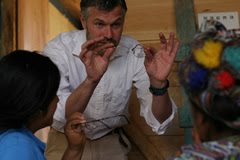
Earlier this week I had the good fortune to meet again with Greg Van Kirk, Ashoka Lemolson Fellow, and Social Entrepreneur in Residence at Columbia University. Greg is an open, engaging and skilled social entrepreneur who has demonstrated that with passion, intelligence and integrity – communities can be made stronger.
The discussion was rich with information and as a result, over the next week or so this blogspace will contain excerpts from that conversation. Further information on Greg’s work can also be found at http://www.newdevelopmentsolutions.com/ . His worked is also featured in the video found on this site.
Some brief background first: Greg runs a variety of programs- including Social Entrepreneur Corps, (SEC). This program provides development programs in Ecuador, Guatemala, and Nicaragua. Working with local agencies, interested local entrepreneurs and with input from seventy-five university students and recent graduates interns from the US – Greg has supported the development of a variety of programs that benefit local villagers in these three countries.
Can you describe your program?
Well we looked at the various programs that existed such as academic programs that focused on the learner’s academic needs, or even volunteer programs that tend to be more relief focus and realized that that would not work for our vision. We don’t see our program as a volunteering program, we are a development organization that focuses year round on developing local people. We have been able to create a structure whereby people can, on a short term basis – focusing as apprentices or interns – share their skills in a manner that adds capacity to the local community; the focus is always on the beneficiaries and the work flows from there. 80% of our current permanent workforce are former interns of the Social Entrepreneur Corps.
I know that you started with the Centro Exlprativo, can you tell me more about that and how that has evolved and benefitted from some of the “incubator” work of SEC?
Centro Explorativo, in Nebaj is an education centre that started as a literacy program, but now has over 2000 books, free computer classes, after school classes on math and literacy, along with sports programs – all these services are free up and running since 2003. The program now boasts three teachers, and is owned and administered by a local organization of Guatemalan’s and has had thousands of participants.
I know that a logical spin-off was combining the computer skills with supporting the needs of tourists via an internet café?
That’s right, from education there has also been a focus on tourism- a site that started as a restaurant, has evolved and created spin- offs such as a guiding business, a coffee shop, a hostel, internet centre, language school – that have now be owned by local folks since 2004. SEC provided $25,000 of program support resulting in total revenues of $750,000.
These are concrete examples of creating a tangible presence in the community, but these locations are backed up the creation of skills that are portable. SEC is a driver of the micro-consignment model . The purpose of which is to create access to products and services that ordinarily would not exist or are donated. We stared with the distribution of wood burning stoves, and now distribute eye glasses, energy efficient bulbs, lamps, and now water treatment programs. These are just the products but SEC has trained and supported – over 200 women entrepreneurs and also work with broker community organizations like libraries, who can in turn provide training. We help create village campaigns, where we assist entrepreneurs do the marketing, advertising etc to a village, building anticipation and then they show up with their goods – so far we have executed over 2000 of these campaigns, sold over 60,000 products. Earned net income in aggregate around $75,000. Now, a social enterprise has been created to allow this activity to continue and to be sustained– it is share based company model owned by Guatemalan men and women, homemakers with no experience, now own a company that generates $80,000 annually in revenue. We estimate that the economic productivity benefit from this i.e. health issues with a stove, savings from not having to buy water or consume contaminated water, increased productivity due to being able to see because of glasses is around $1.4 million in Guatemala alone. We have now taken this model to Ecudaor and Nicargaua – and all sales are even across the board and consistent with the beta work we have done in Guatemala
Greg’s work has captured the attention of the social entrepreneur community and there is a desire to determine how this can be duplicated in other sites. More information on this issue, and the notion of engagement will be discussed in blogs posted later this week. Stay tuned, or subscribe!
The Acacia Group works with Greg and Social Entrepreneur Corps in Nebaj, and is offering an opportunity for individuals or groups to participate in, observe and learn from SEC and the citizens of Nebaj. This experience is combined with personal and group leadership development coaching before, during and after the trip for up to three months. Interest is building, so book soon at www.theacaciagroup.ca
Thursday, June 10, 2010
Two Stories, Three Questions - Getting Clarity on CSR and Social Justice

Two stories came to my attention this week that have caused me to pause and consider the nature of organizations and the potential influence they hold in the world – for good or for harm. They in turn generated three questions
1. When entering into a business venture in a developing country, is it not a fundamental responsibility of the corporation to determine and then avoid risk to environment and people if the business is created there?
2. What is the depth, intensity and duration of CSR activities as they relate to social, environmental and political processes in any country within the corporate value chain? Is there integrity or is it window dressing?
3. How do we get the message across that for CSR to work it must be embedded into all aspects of the corporate decision making process and strategy?
The first story arrived via a media campaign from an organization requesting support for a writing campaign in support of the Women of Atenco – Mexico. The background to the request is well covered on internet sites including Amnesty USA . The facts appear to be that in 2006 violence between protesters and police resulted in the death of a child, and with this tragedy local peasant organization in San Salvador Atenco Mexico gathered to show their support for the community. The Mexican authorities responded with force and of arrested hundreds including at least 45 women. Of the 45 women arrested, 26 subsequently reported being physically and sexually assaulted by Mexican police while they were being held. One officer has been convicted (of a minor offence) and none of the other officials who perpetrated the abuse have been adequately held responsible even though the Supreme Court of Mexico issued a statement in 2009 that human rights abuses did take place. Amnesty International USA is inviting the public to join them in a letter writing campaign to ask the Special Prosecutor on Violence Against Women for a full and impartial investigation of those involved in the rape, sexual violence, torture, and ill treatment of the female detainees and that the perpetrators be brought to justice. – What is the CSR link? Based on a variety of accounts, the impetus for the initial protest, where the child died, was a dispute related to plans to build a Wal-Mart at the site historically used by flower vendors.
The second story was a documentary titled `The Coca-Cola Case’. The event that sparked the documentary was the murder of unionized workers at a Coca Cola licensed bottling plant in Columbia. In the film, the journey by a small group of lawyers representing the workers at the plant who attempted to bring a case against Coca Cola is chronicled. While the film has received mixed reviews, the facts of the case include the death of and death-threats against workers at the plant who have joined the union, and the reputation of Colombia as a country that is facing a human rights crisis – particularly against trade unionists. The current state of Colombia’s human rights violations is well documented on sites such as Amnesty USA and The Henning Center (a University of California, Berkeley project of the Center for Labor Research and Education).
The questions that these two stories raise for me are basic.
1. When entering into a business venture in a developing country, is it not a fundamental responsibility of the corporation to determine the risk to environment and people if the business is created there?
This question is asked with a puzzled expression and a bit of naiveté – surely it cannot be deemed right to establish a business at the cost of human life or the violation of human rights? Organizations have access to information on the state of human rights and environmental practices in every country in the world. Basic project management processes highlight the need for a risk assessment – in these cases – was the mitigation strategy merely a detached exec stating “Make the problem go away”?
2. What are the depth, intensity and duration of CSR activities as they relate to social, environmental and political processes in any country within the corporate value chain? Is there integrity or is it window dressing?
The second question relates to the state of Corporate Social Responsibility (CSR) in large multinational corporations. How real is the embracing of CSR? Both Wal-Mart and Coca-Cola have recently launched significant CSR programs and this is a positive step. It may well be that in typical organizational form, changes are happening slowly and a snapshot in time does not do justice to the changes that are underway. Changes take time and a longitudinal view may provide a better perspective on the state of CSR. However both companies seem to be silent on the events in Mexico and Colombia respectively. As large corporations, they have the influence to declare and abide by a value ethic that upholds human rights and environmental protection as paramount in the business decision making processes.
3. How do we get the message across that for CSR to work it must be embedded into all aspects of the corporate decision making process and strategy?
This final question comes from a place of curiosity regarding an organization’s internal decision making process and the ability of humans (and I include myself in this) to disconnect my decisions from the harmful impacts that may result. What will it to take to create an impetus for organizations to examine their decision making – at all organizational levels? I acknowledge that it is very difficult to anticipate all the intended and unintended consequences of an organization’s decisions. Surely there are some outcomes that must be avoided at all costs and about which a clear statement can be made. Over the past decades however, a tremendous amount of skill and knowledge that has been developing around processes for facilitating better decision – making – let’s take advantage of them in the spirit of doing right and avoiding harm.
As companies orient themselves to behave as large economies versus as true members of a community it can be easy for them to appear reckless in their desire to grow, and at times tread on fundamental human rights. I, however, continue to choose optimism – that people will find the courage within their roles in life to examine their own values and to choose to do good. That the trend towards true CSR engagement is not just an illusion, but evidence that big corporations are starting to get clear on their responsibilities.
In an earlier blog the question was asked if there was any research about employees making choices based on their values when those values are opposed to the values of their organizations. What is your experience in this type of situation?
In light of the magnitude of the task at hand, sometimes a simple action can make a difference. Please click here if you wish to take action on behalf of the Women of Atenco.
This post was written by Penny Lane, Managing Director of the Acacia Group, responsible for Community Development and International Relations
The Acacia Group’s mission is to offer transformative and unique leadership development for organizations seeking to live out their global citizenship. To do this we blend knowledge from Corporate Social Responsibility, Community Development and Leadership Development and Learning to create new opportunities for excellence for our clients. For more information, visit www.theacaciagroup.ca
Subscribe to:
Posts (Atom)

 Posts
Posts


